
Campo Morado
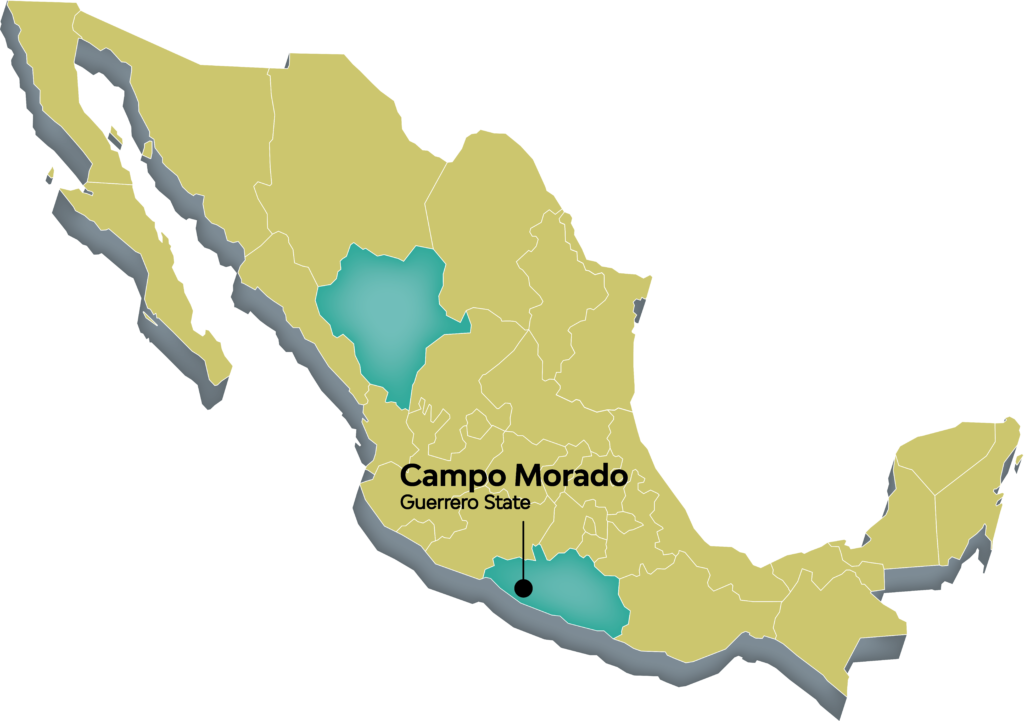
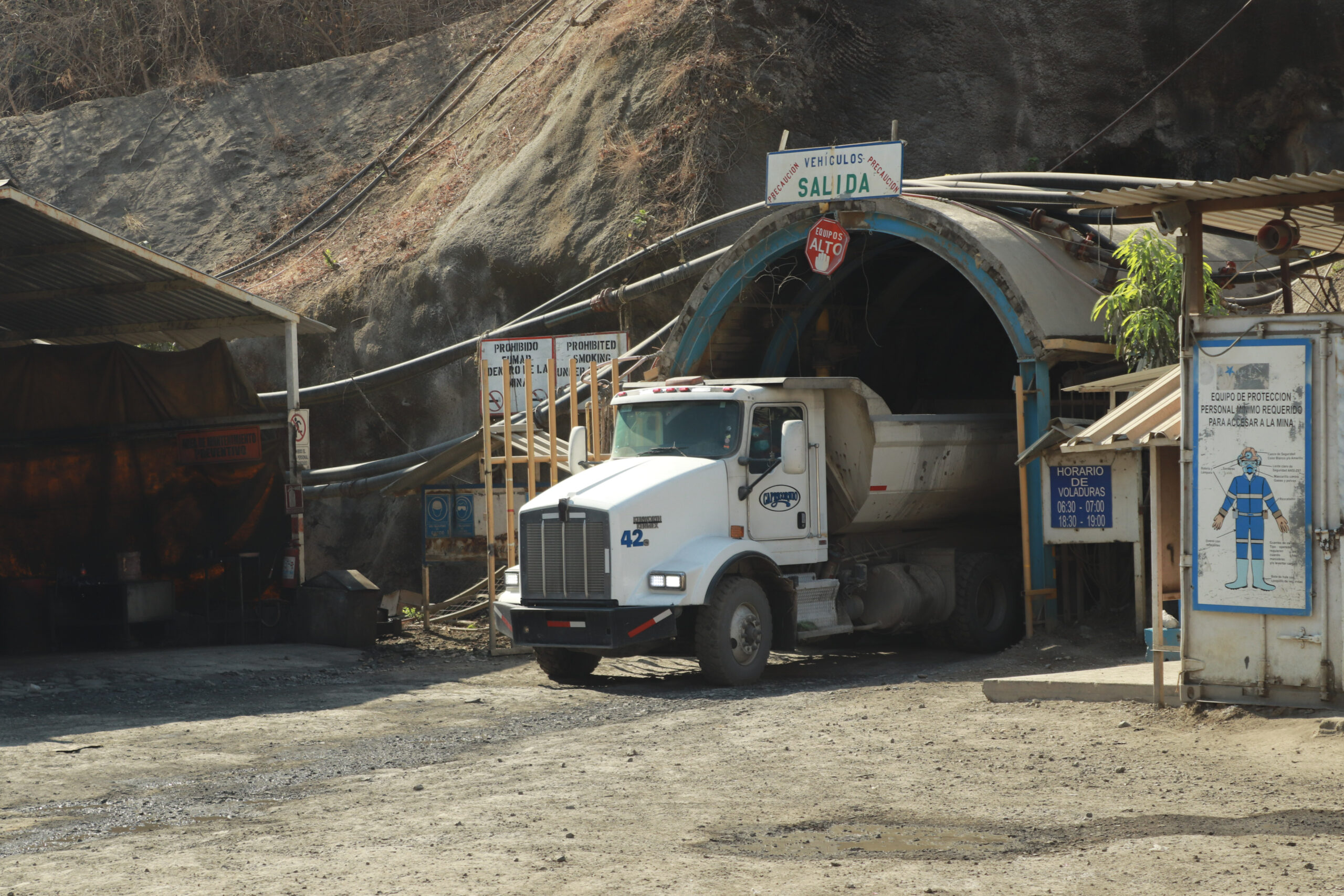
Campo Morado is a polymetallic underground operation located in the state of Guerrero, Mexico.
M&I Oz Gold
M&I Oz Silver
M&I Oz Au Eq
Resources, reserves and contained metal estimates based on Preliminary Economic Assessment dated March 31, 2018
Overview
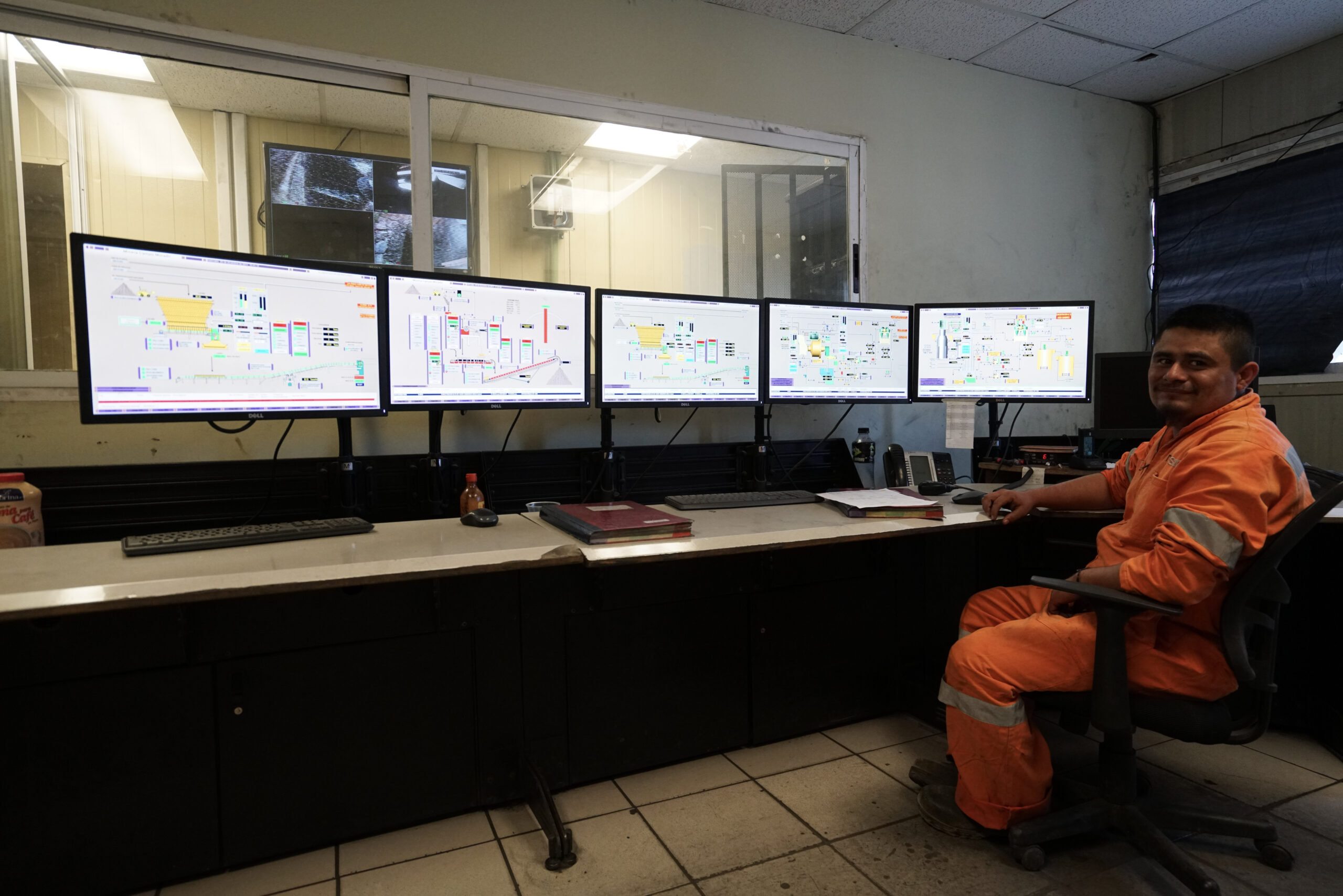
Campo Morado is a fully operating asset that brings a consistent cash flow to the Company and provides exposure to base metal markets.
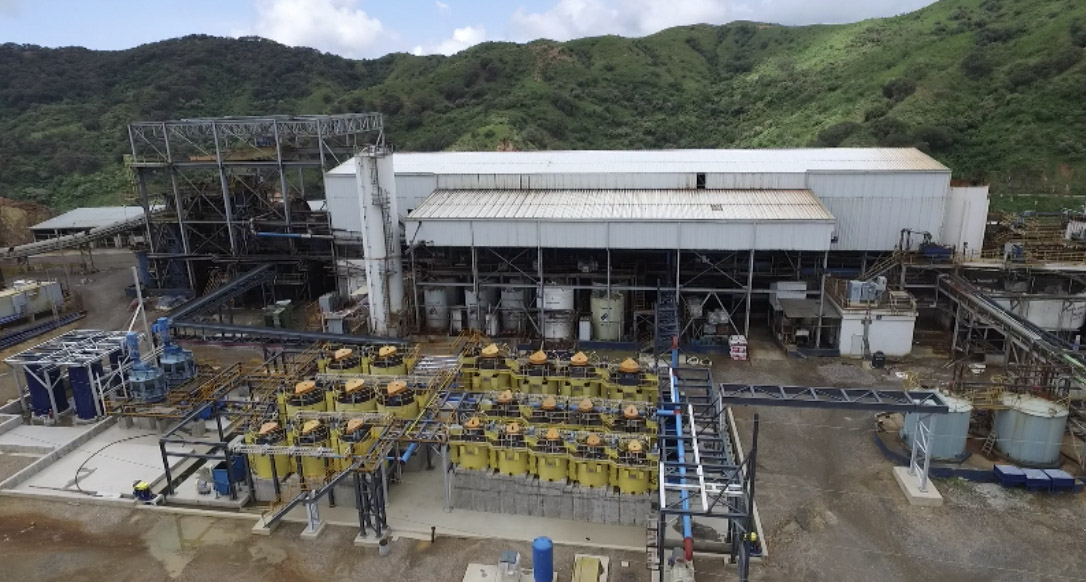
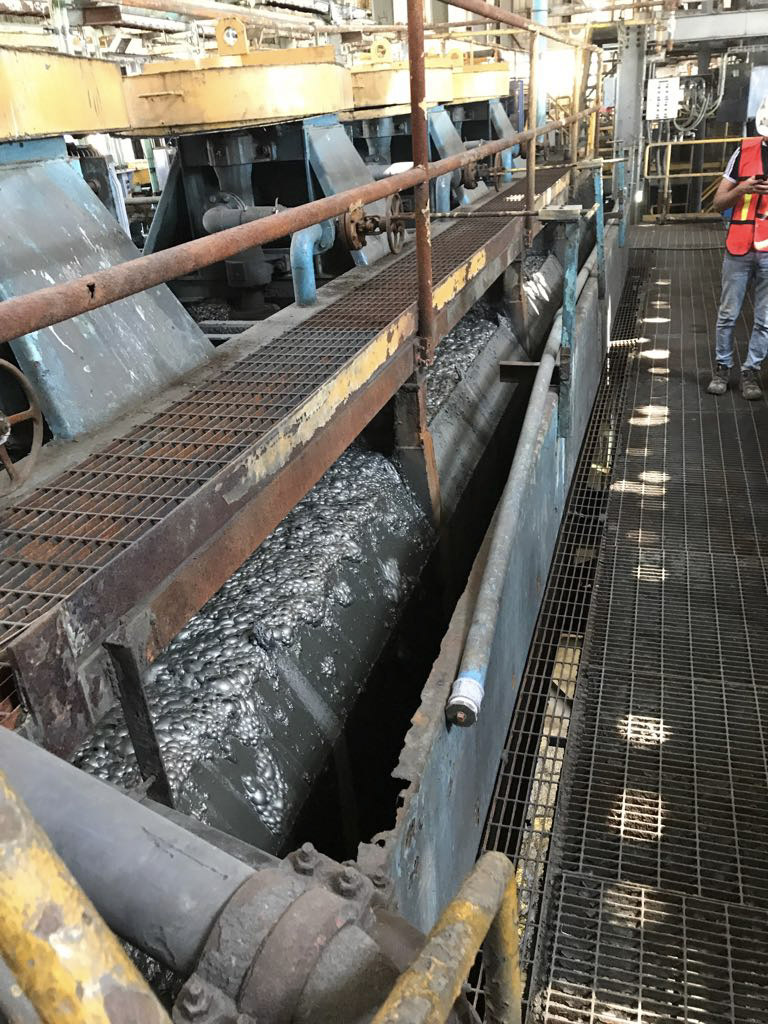
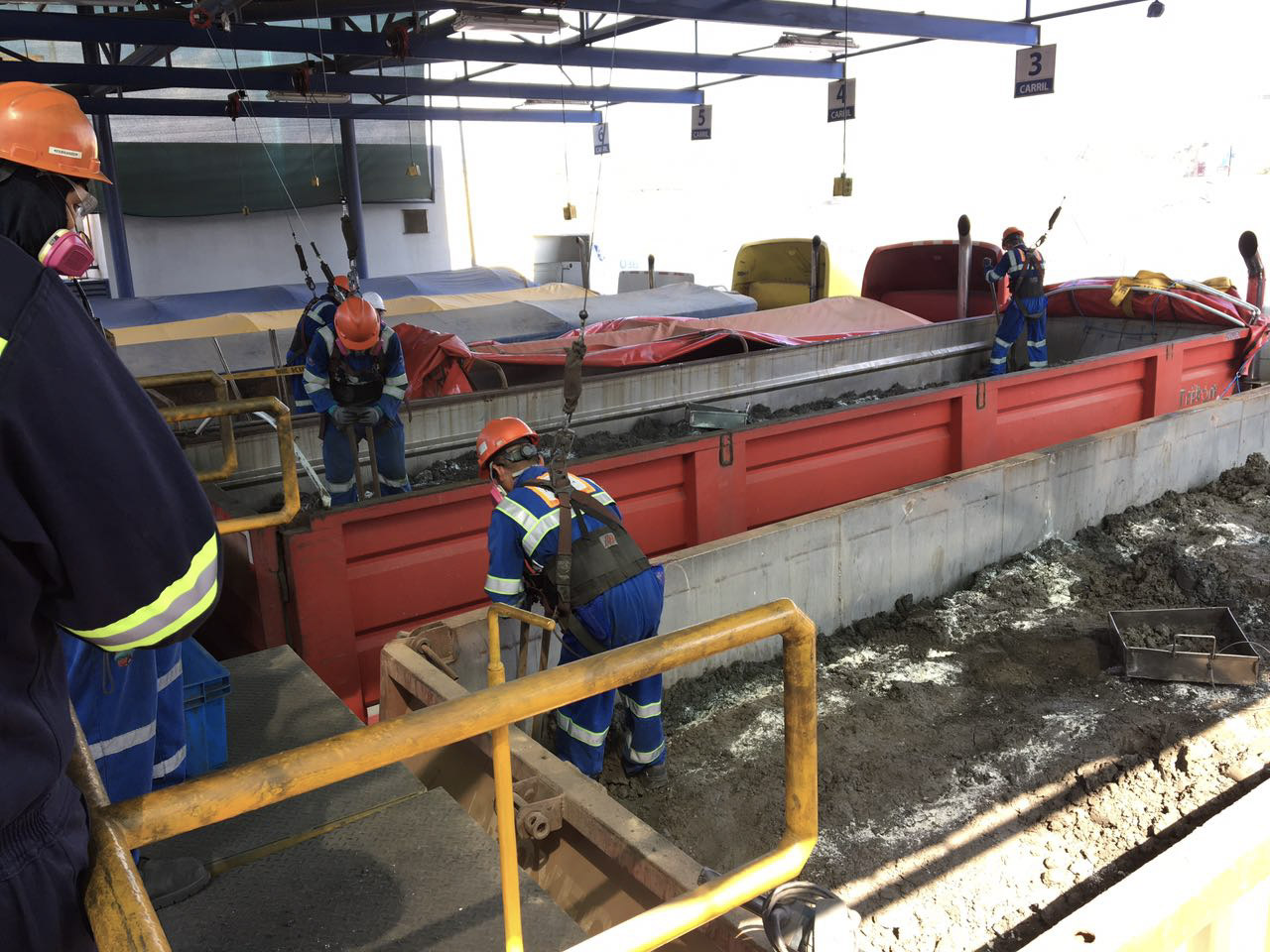
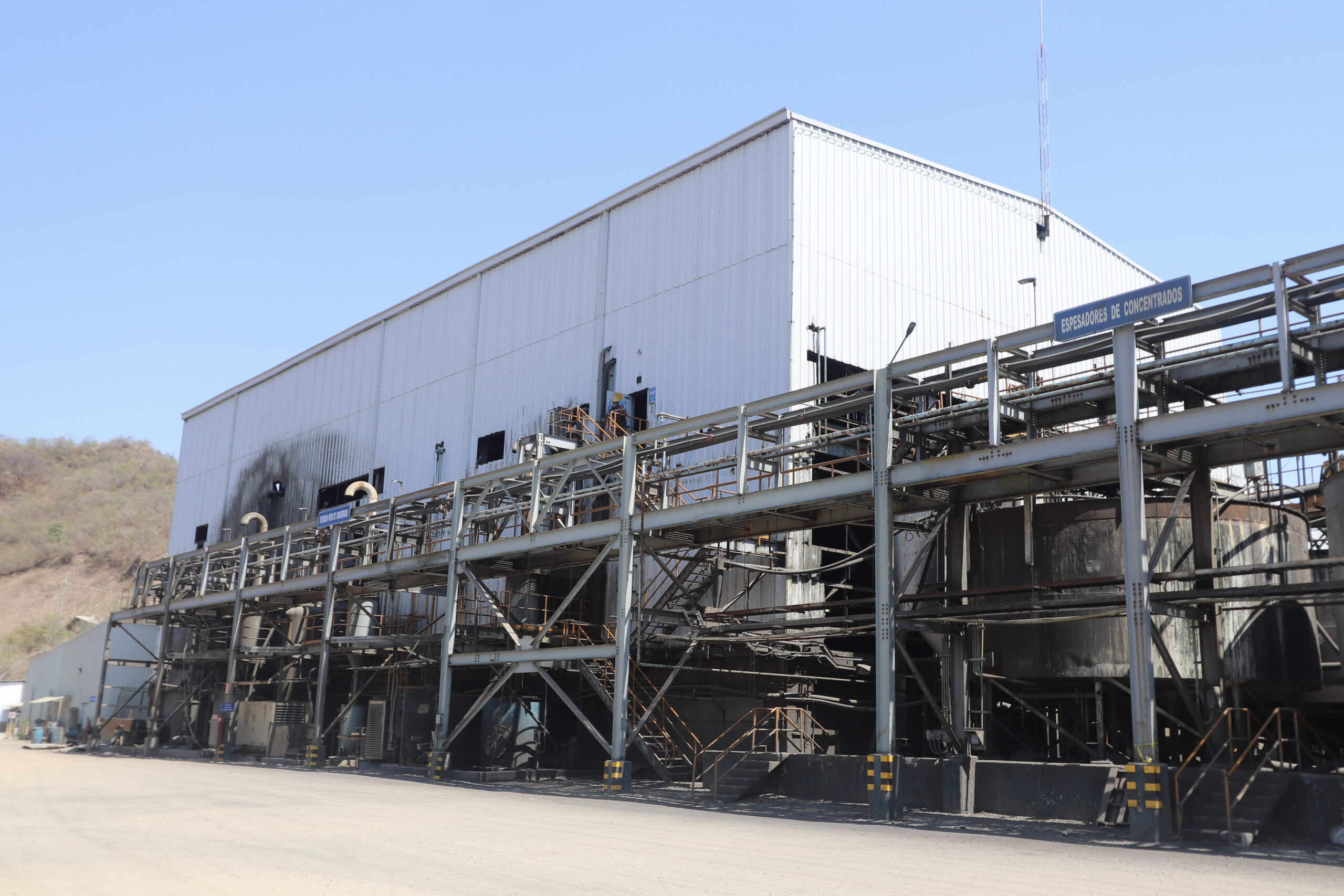
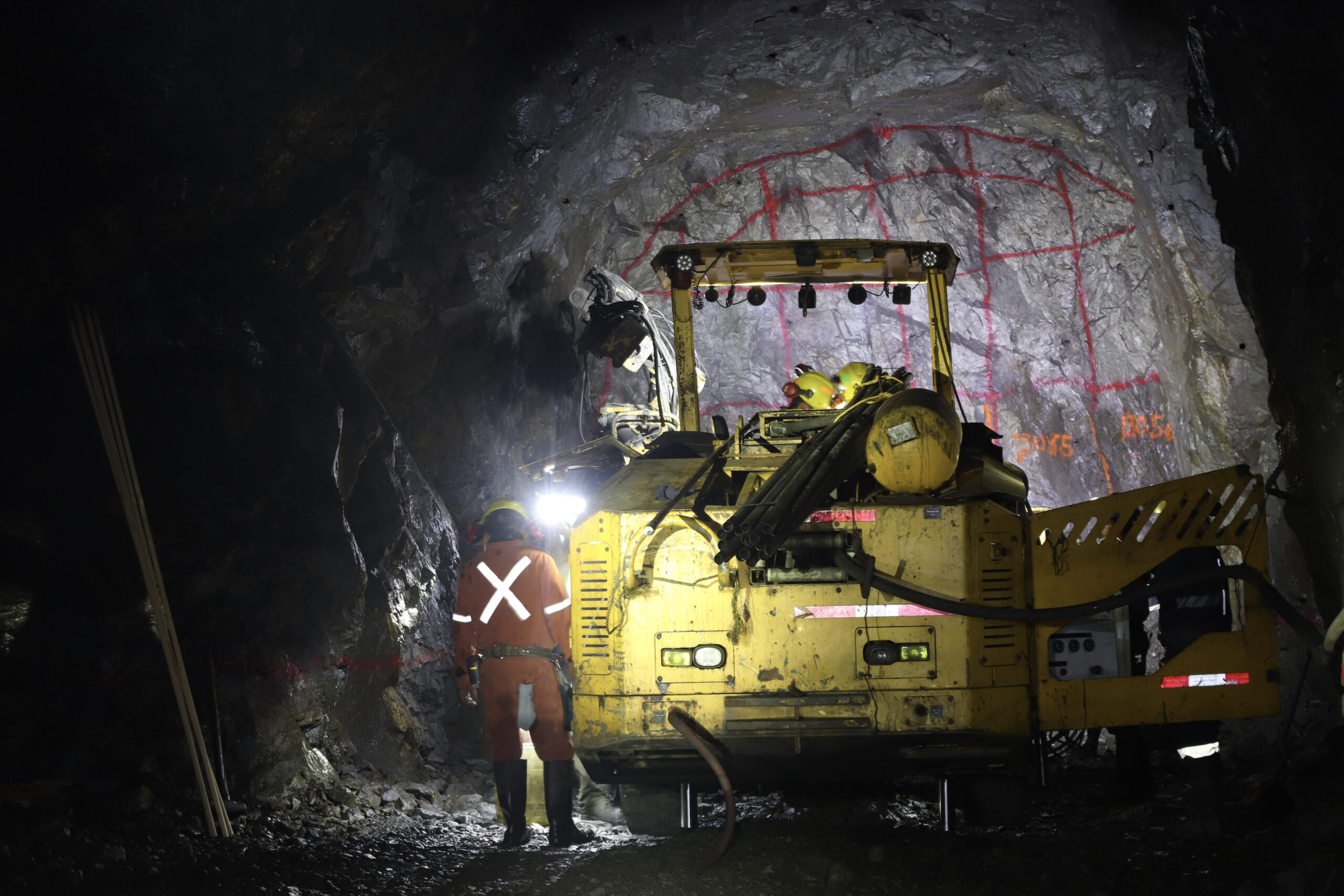
Campo Morado is an underground multi-metal mine with infrastructure, installations and equipment capable of processing 2,500 tonnes of ore per day. There are over 700 exploration diamond drill holes in place which have outlined six mineralized bodies containing approximately 16.6 million tons of measured and indicated resources grading 4.01% zinc, 0.80% copper, 0.93% lead, 123 g/t Ag and 1.70 g/t Au plus, an additional 1 million tons of inferred mineral resources as calculated and released by Titley Consulting Ltd. in November 2017. The Campo Morado Mine was commissioned and commenced operations in 2009 by Farallon Resources. Nyrstar purchased Farallon Resources in a friendly takeover in 2010 for the equivalent of approximately C$420 million thereby gaining control of Campo Morado. Nyrstar produced up to the end of 2014 when mining operations were suspended in January 2015 and the mine was placed on care and maintenance due to deteriorating industry conditions.
On April 27, 2017 Luca signed an agreement with Nyrstar to acquire 100% of the Campo Morado mine. On September 18, 2017, Luca announced that it had secured the funding required to initiate the restart of continuous mining operations at the Campo Morado Mine and on October 23, 2017 the Company announced the restart of full scale mining and mill processing on a pre-production basis from mine development at a starting rate of 1,400 tonnes per day. On May 23, 2017 the Company was pleased to announce the start of commercial production with the aim of increasing throughput at the mill to its 2,500 tonne per day capacity.

Technical Reports
Location & Infrastructure
Nestled in the northeastern region of Guerrero State, Mexico, lies the Campo Morado Project area. This expansive property, spanning an impressive 12,090 hectares, is situated 160 km southwest of Mexico City and 20 km southeast of the municipality of Arcelia’s city centre. Seven contiguous mineral concessions grace this land, each contributing to the vast wealth that lies beneath the surface.
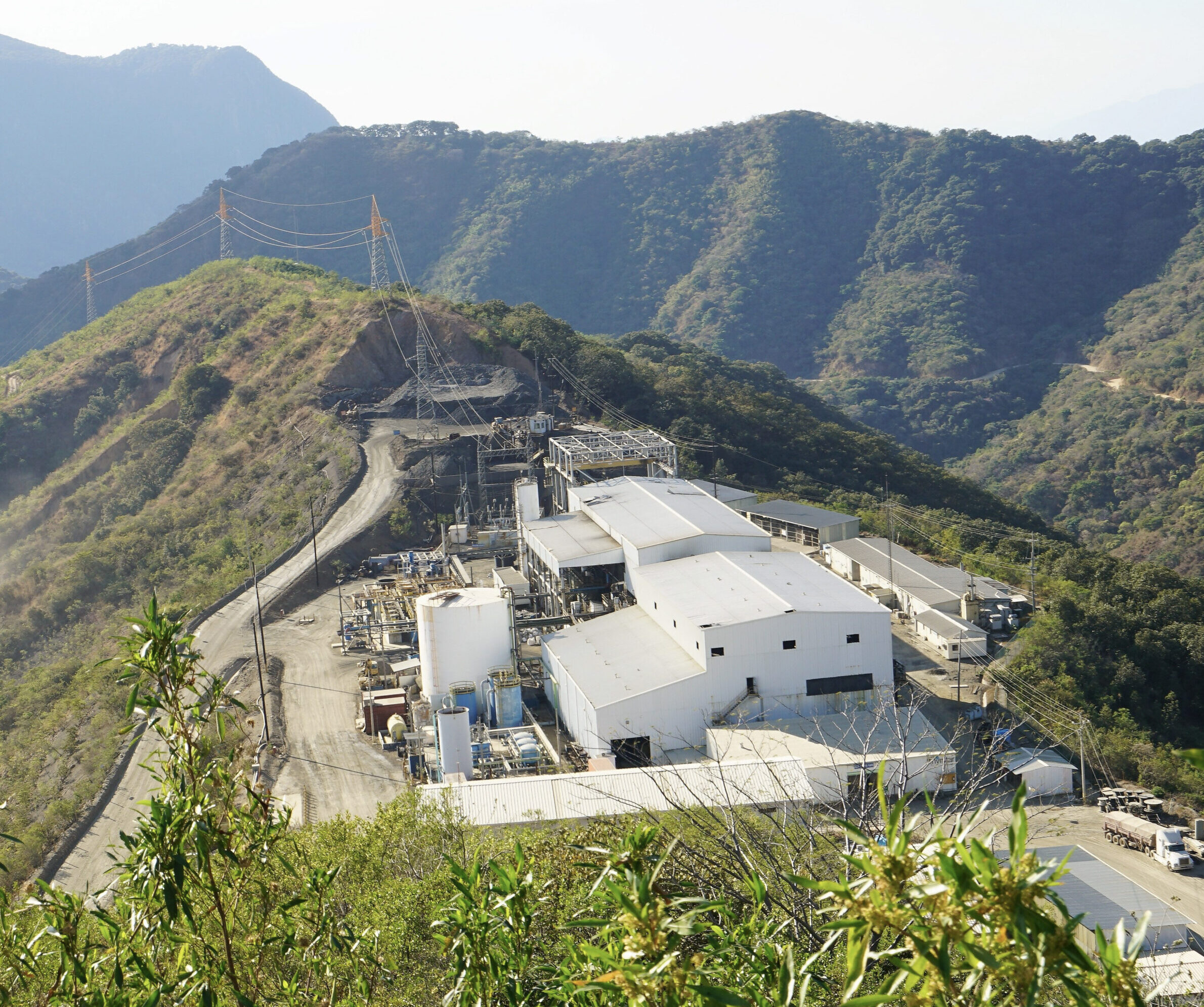
The journey to Campo Morado from Mexico City is a scenic one, traversing the length of Highway 95, a major artery linking the bustling capital to the coastal city of Acapulco. From there, the route diverts to Highway 51, leading west towards Arcelia. This all-weather, two-lane road serves as the main east-west highway in Guerrero State. A further 25 kilometres southeast from Arcelia, on a mostly unpaved municipal road, the western boundary of the Mine Property emerges. A few kilometers further east, the Campo Morado process plant stands, a testament to the mining prowess of the region.
The drive from Mexico City to Campo Morado is a journey of approximately 360 km, typically taking five to six hours. However, the distance is not just measured in kilometers, but also in the transformation of the landscape, from the urban jungle of the capital to the rugged beauty of Guerrero State.
Luca has been diligent in their recruitment efforts, focusing on hiring and training local workers. This policy, initially put into place by Farallon in 1996, has been continued by Luca, fostering a sense of community and providing valuable skills to the local population. Many of these workers have been part of the G9 Mine and Mill complex operations, which started in 2009.
The Company’s commitment to the local communities extends beyond employment. Goods and services required for mining operations are primarily sourced from Mexico City, stimulating the local economy. Additionally, Luca has ensured sufficient surface rights and the availability of power and water for mining operations, ensuring a sustainable and profitable future for Campo Morado.




Resources & Reserves
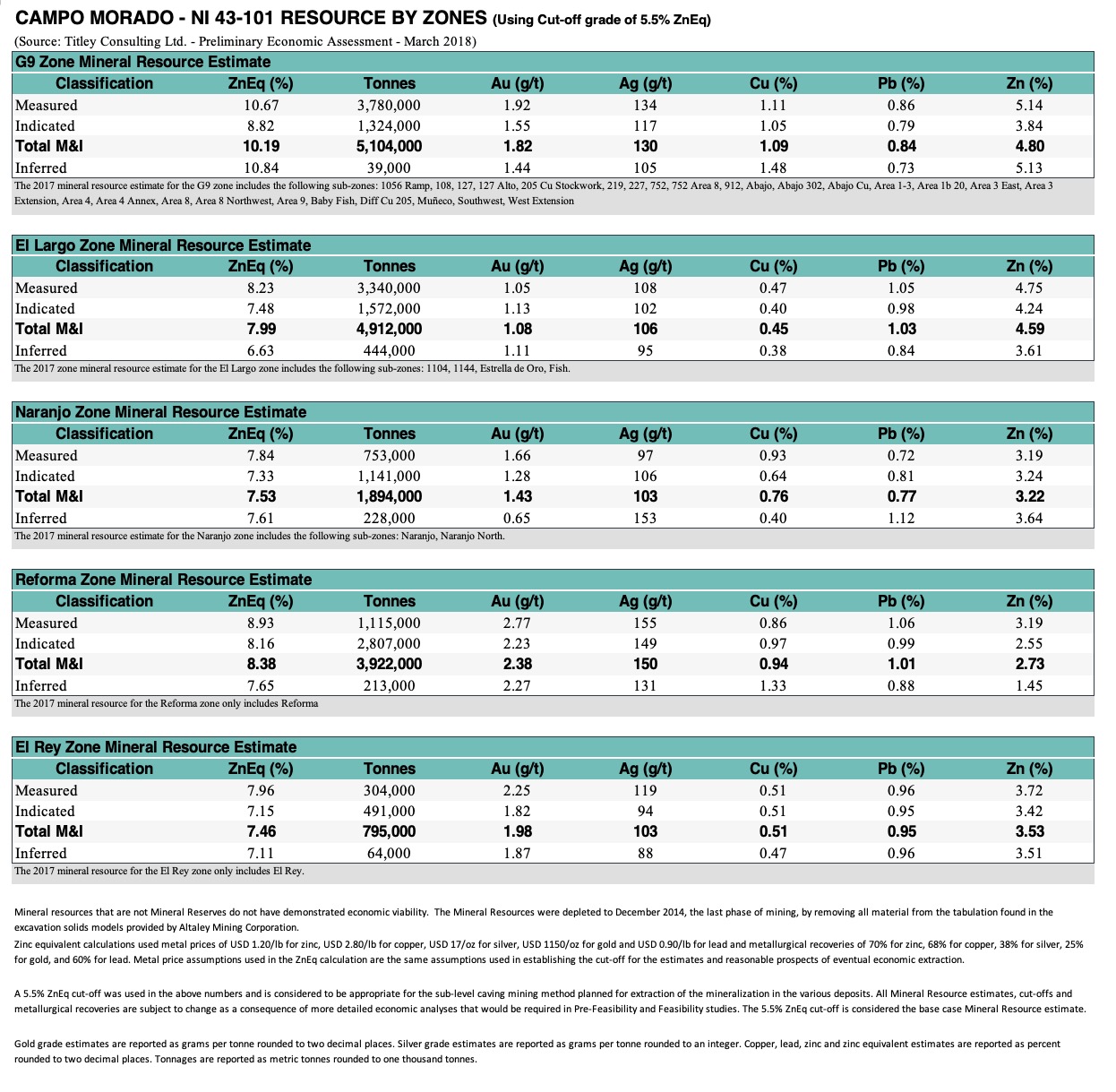
The following mineral resources have been calculated using a cut-off of 5.5% Zinc Equivalent. These resource numbers are preliminary in nature. They include inferred mineral resources that are considered too speculative geologically to have the economic considerations applied to them that would enable them to be categorized as mineral reserves.
Measured & Indicated Resources
Classification | ZnEq% | Tonnes | Gold | Silver | Copper | Lead | Zinc |
|---|---|---|---|---|---|---|---|
Total M&I | 8.68 | 16,627,000 | 1.70 g/t | 123 g/t | 0.80 % | 0.93 % | 4.01 % |
Measured | 9.27 | 9,292,000 | 1.7 g/t | 124 g/t | 0.82 % | 0.94 % | 4.56 % |
Indicated | 7.94% | 7,335,000 | 1.7 g/t | 123 g/t | 0.80 % | 0.92 % | 3.31 % |
Inferred Resources
Classification | ZnEq% | Tonnes | Gold | Silver | Copper | Lead | Zinc |
|---|---|---|---|---|---|---|---|
Inferred | 7.27 | 998,000 | 1.32 g/t | 116 g/t | 0.64 % | 0.92 % | 3.2 % |

History
1810
1885
1912-1940
1995-1998
2004-2007
2010
20??
Geology
Regional Geology
The Campo Morado area lies in the Eastern part of the Teloloapan Subterrane of the Guerrero Terrane close to its margins with the Mixteco Terrane to the east, the Sierra Madre Occidental to the west, and the Trans-Mexican Neogene Volcanic belt to the north (Figure 7-1). An elongate, fault bounded, composite terrain, the Guerrero Terrane sits along the Mexico’s southwestern edge, with the Pacific Ocean and the Cocos plate to its west (Coney, 1985). It primarily consists of submarine, or rarely, subaerial volcanic and sedimentary successions ranging from Upper Jurassic to Middle Upper Cretaceous in age (Centeno-García et al., 2003).
Property Geology
The Campo Morado property hosts several precious metal-rich volcanic associated massive sulphide deposits, which occur in a sequence of felsic to intermediate flows and tuffs, and heterolithic fragmental rocks. Most are in the upper part of the felsic pile or at the contact with stratigraphically overlying, fine-grained, chemical and clastic sedimentary rocks. The five major lithostratigraphic units from oldest to youngest are the Guerrero Ridge intermediate volcanicsubvolcanic unit, the Naranjo sedimentary unit, the Campo Morado felsic volcanic unit, the La Canita volcanic unit and, the Reforma sedimentary unit. Two stages of magmatic pulses intrude all of these units except La Canita. One is associated with the Campo Morado felsic unit, the other being of Tertiary age.
Exploration
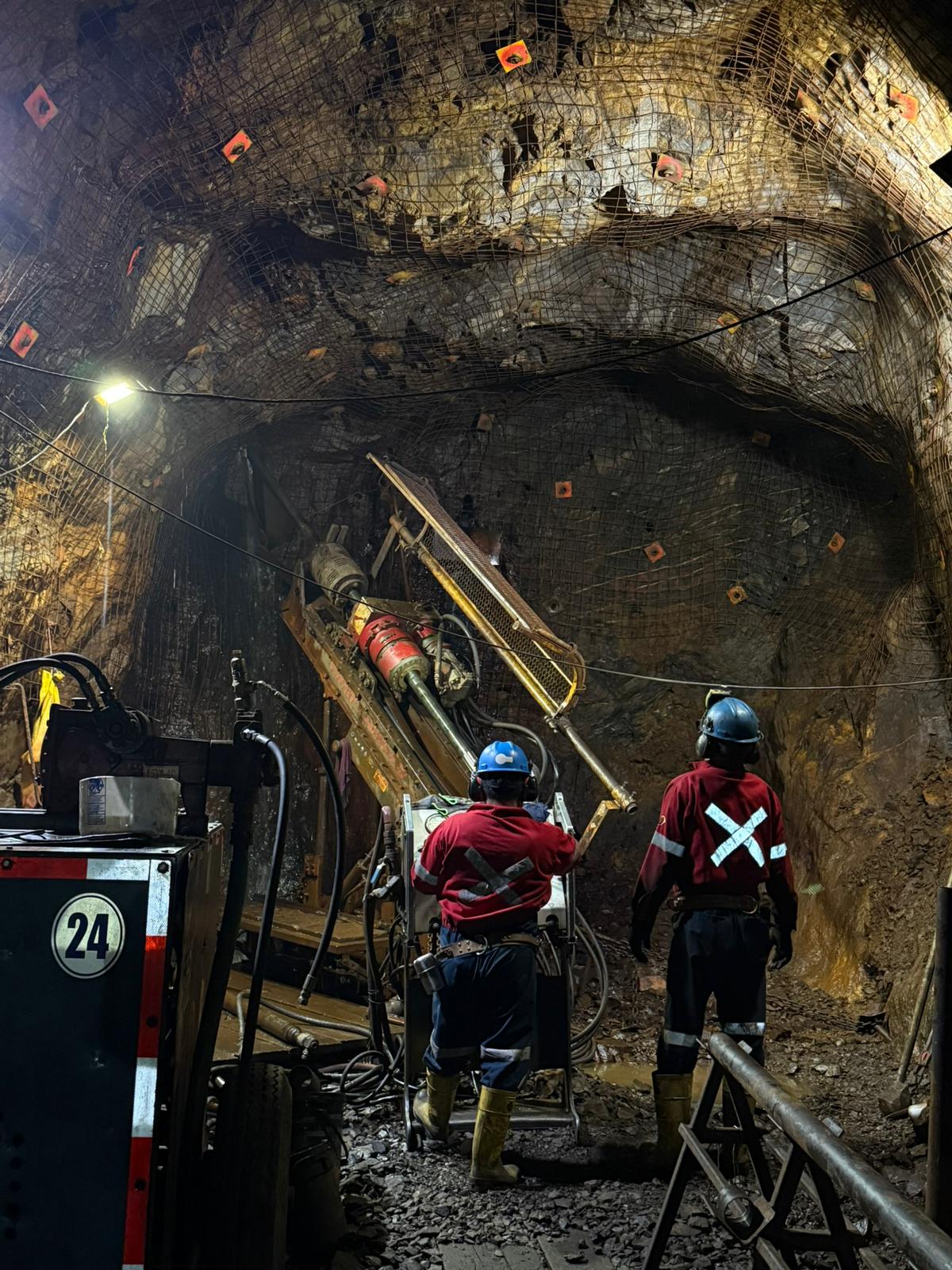
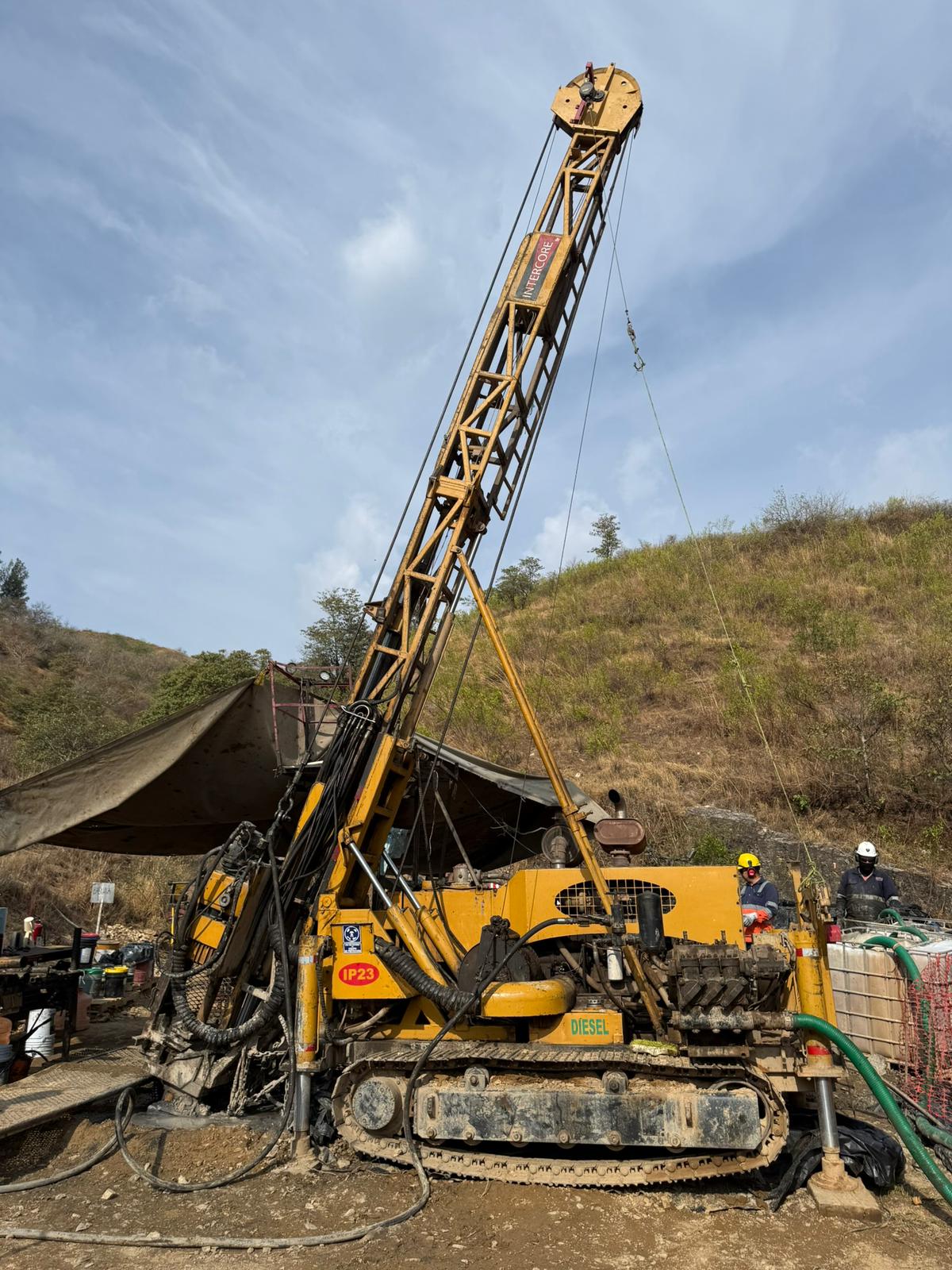
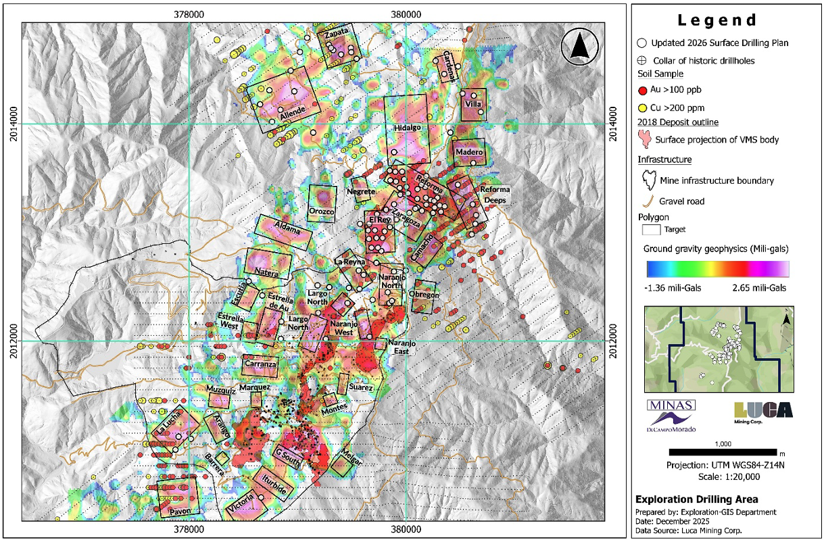
Exploration at Campo Morado is advancing through Luca’s three-year, US$25 million exploration program, representing the first district-wide exploration initiative undertaken at the project in more than a decade. The program combines surface and underground drilling with the integration of over 650,000 metres of historical drilling and geological data, leveraging modern targeting techniques, including AI-assisted interpretation, to identify new and expand known mineralized zones across the property.
Current exploration activities are focused on 38 priority targets generated through the integration of geological, geophysical, and geochemical datasets. Drilling is targeting both near-mine resource growth opportunities and broader district-scale discoveries across the largely underexplored Campo Morado land package. While the program is expected to support resource growth and mine-life extension, it is also designed to unlock the district’s significant exploration potential and identify new mineralized centres beyond the currently defined deposits. Recent drilling results continue to demonstrate the scale and prospectivity of the Campo Morado VMS system.
Recent Exploration Highlights
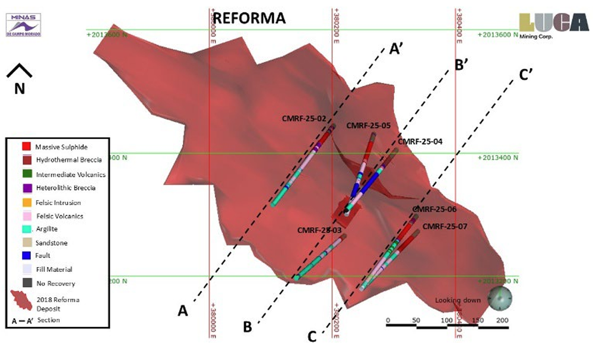
Reforma
- Drilling returned 37.2 metres grading 13.85 g/t AuEq, including 6.2 metres grading 43.77 g/t AuEq, confirming the presence of high-grade precious metal-rich mineralization within the system.
Largo Norte
- Multiple long intervals of continuous polymetallic VMS mineralization were intersected, including:
135.7 metres grading 1.58 g/t Au, 77.1 g/t Ag, 0.88% Cu, and 1.61% Zn
118.2 metres grading 2.53 g/t Au, 77.9 g/t Ag, 0.76% Cu, and 1.99% Zn
- These results extend the limits of a substantial mineralized body adjacent to existing mine workings.
El Rey
- Drilling returned 28.6 metres grading 5.35 g/t AuEq, including 2.8 metres grading 12.55 g/t AuEq, expanding the deposit beyond historical interpretations and highlighting additional growth potential.